









Description
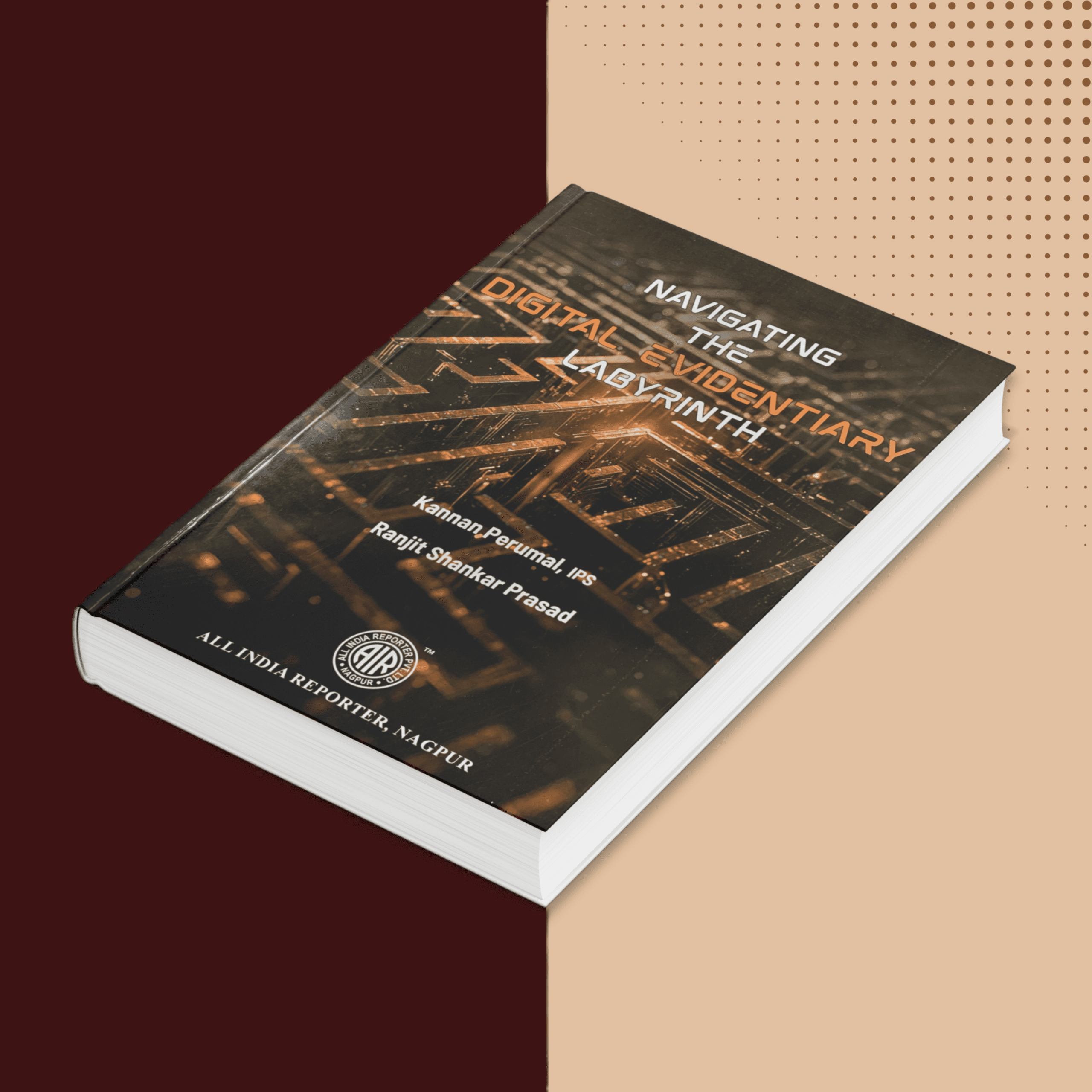
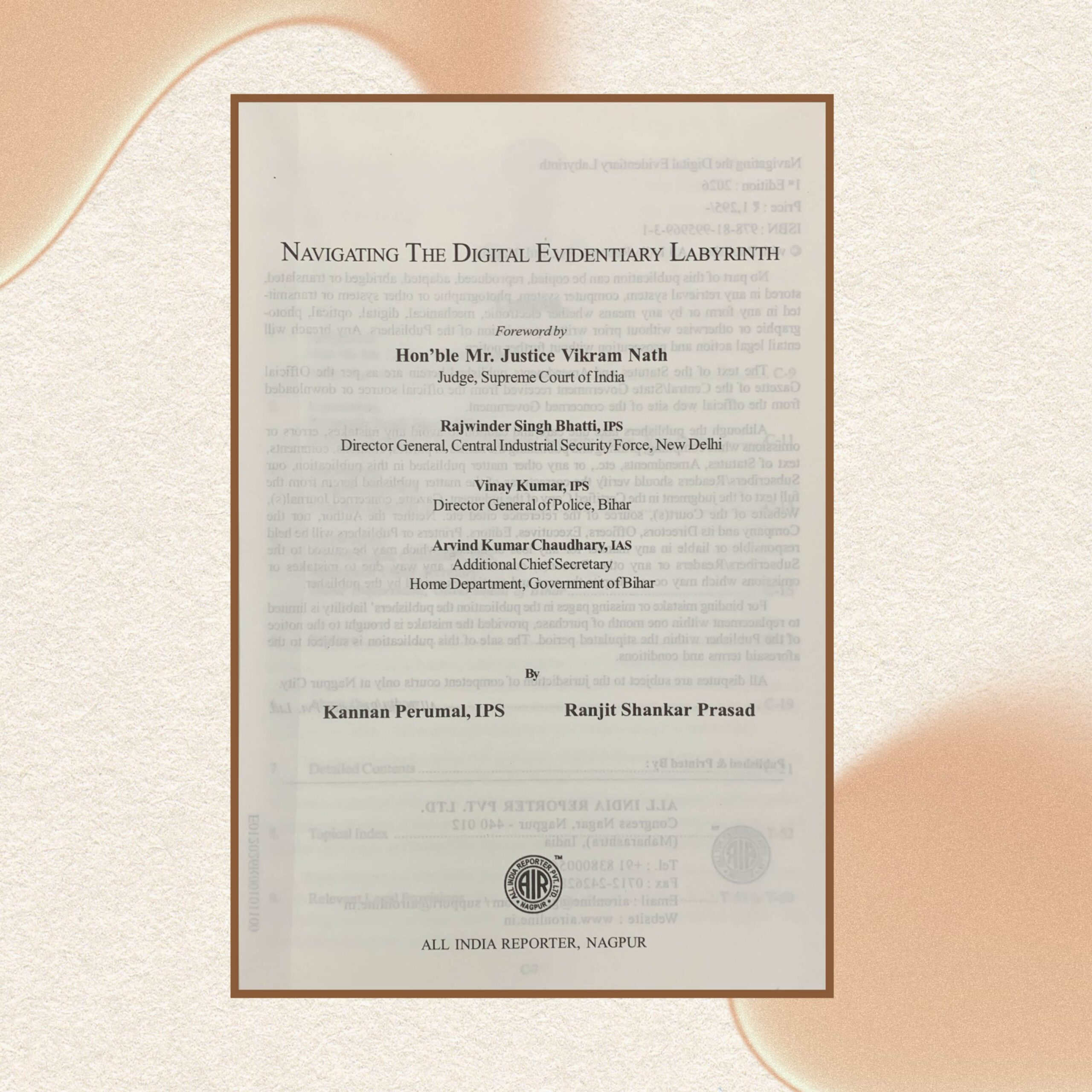
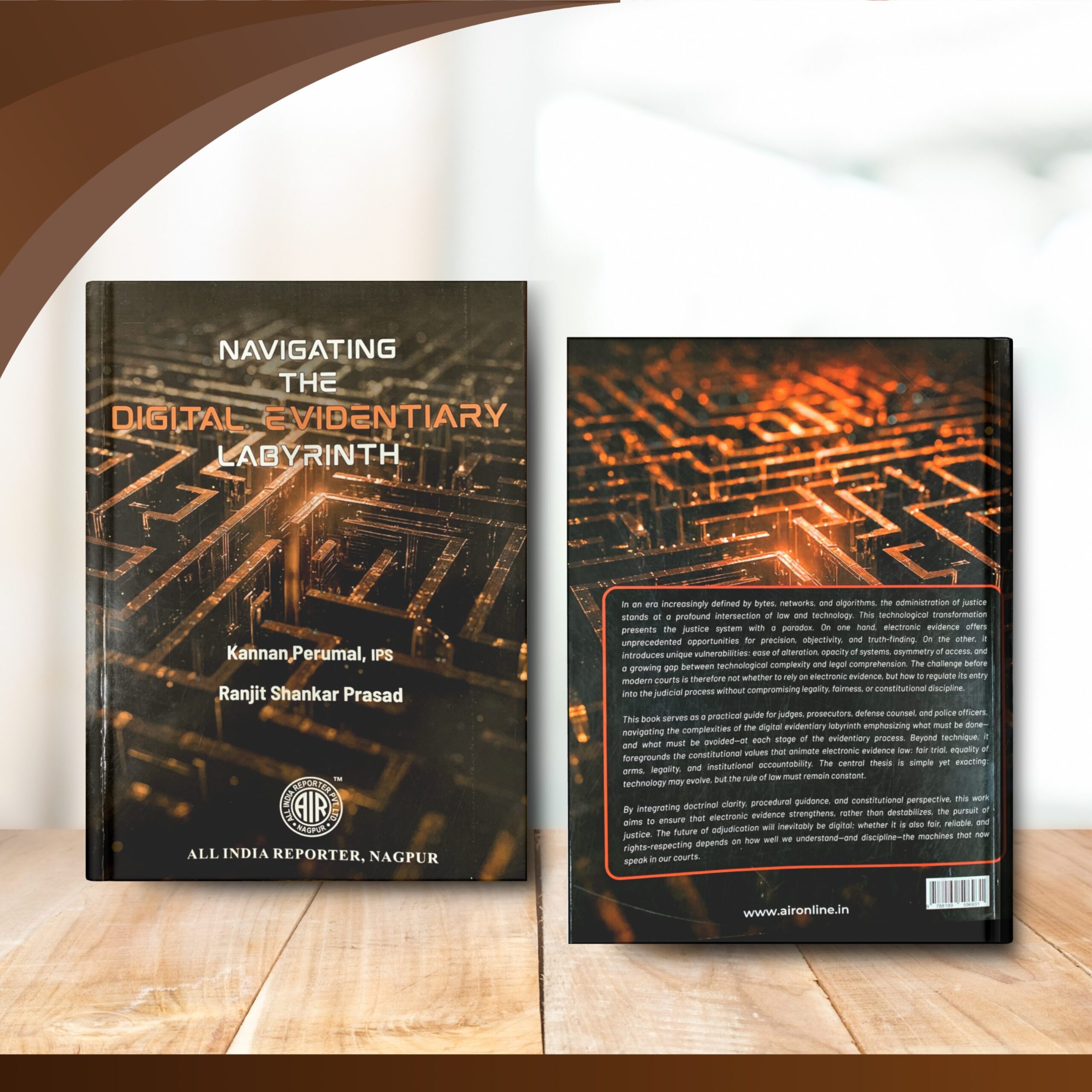
In an era where every digital footprint can decide a verdict, Section 63 of the BSA, 2023 has redrawn the contours of admissibility. This lifecycle-based commentary – co-authored by IPS officer Kannan Perumal and veteran legal practitioner Ranjit Shankar Prasad – guides police, prosecutors, defence counsel, and judges through seizure, chain of custody, BYOD dilemmas, expert testimony, and constitutional safeguards under Puttaswamy and Article 20(3). Anchored in Anvar P.V. and Arjun Panditrao Khotkar, it converts the BSA’s promise into practical discipline – an indispensable companion for the digital courtroom: rigorous, role-specific, and reform-ready. The age of digital evidence is here – and with it, a quiet revolution in the law of proof.
Section 63 of the Bharatiya Sakshya Adhiniyam, 2023 reshapes the admissibility of electronic records, carrying forward the discipline established in Anvar P.V. v. P.K. Basheer (2014) and Arjun Panditrao Khotkar v. Kailash Kushanrao Gorantyal (2020). Yet statutory reform alone cannot guarantee justice. Whether digital evidence strengthens or destabilizes a case depends on how it is handled – at every stage of its life.
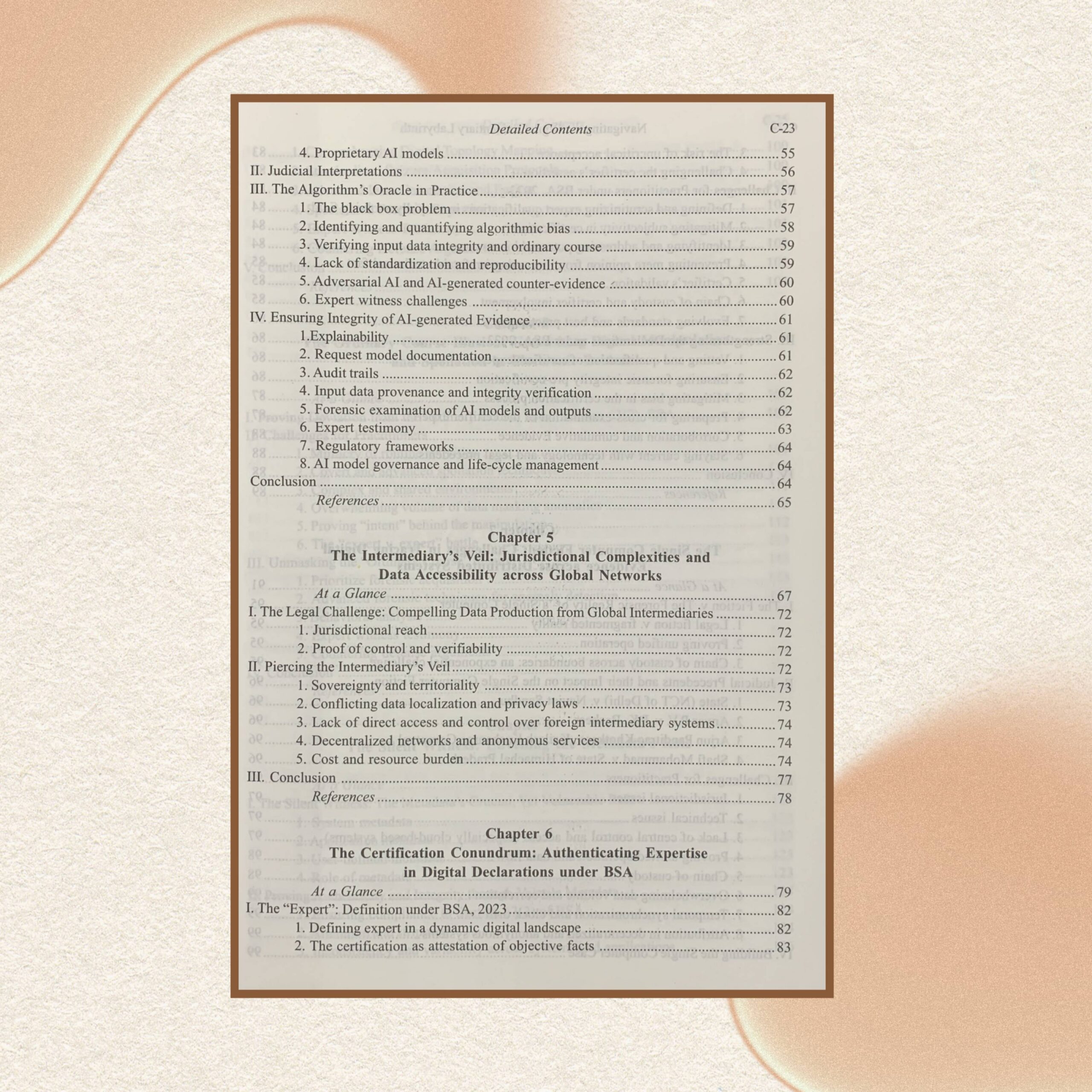
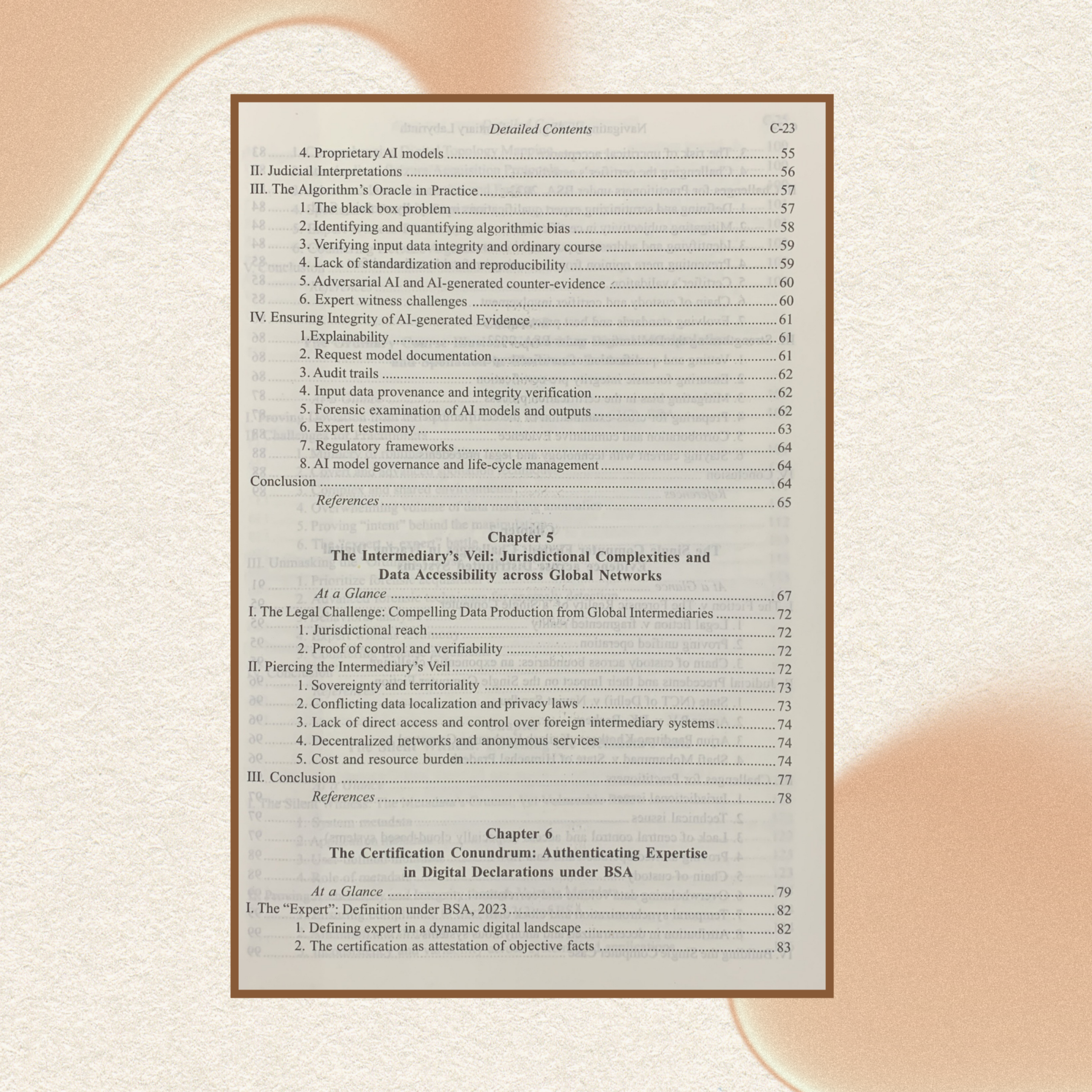
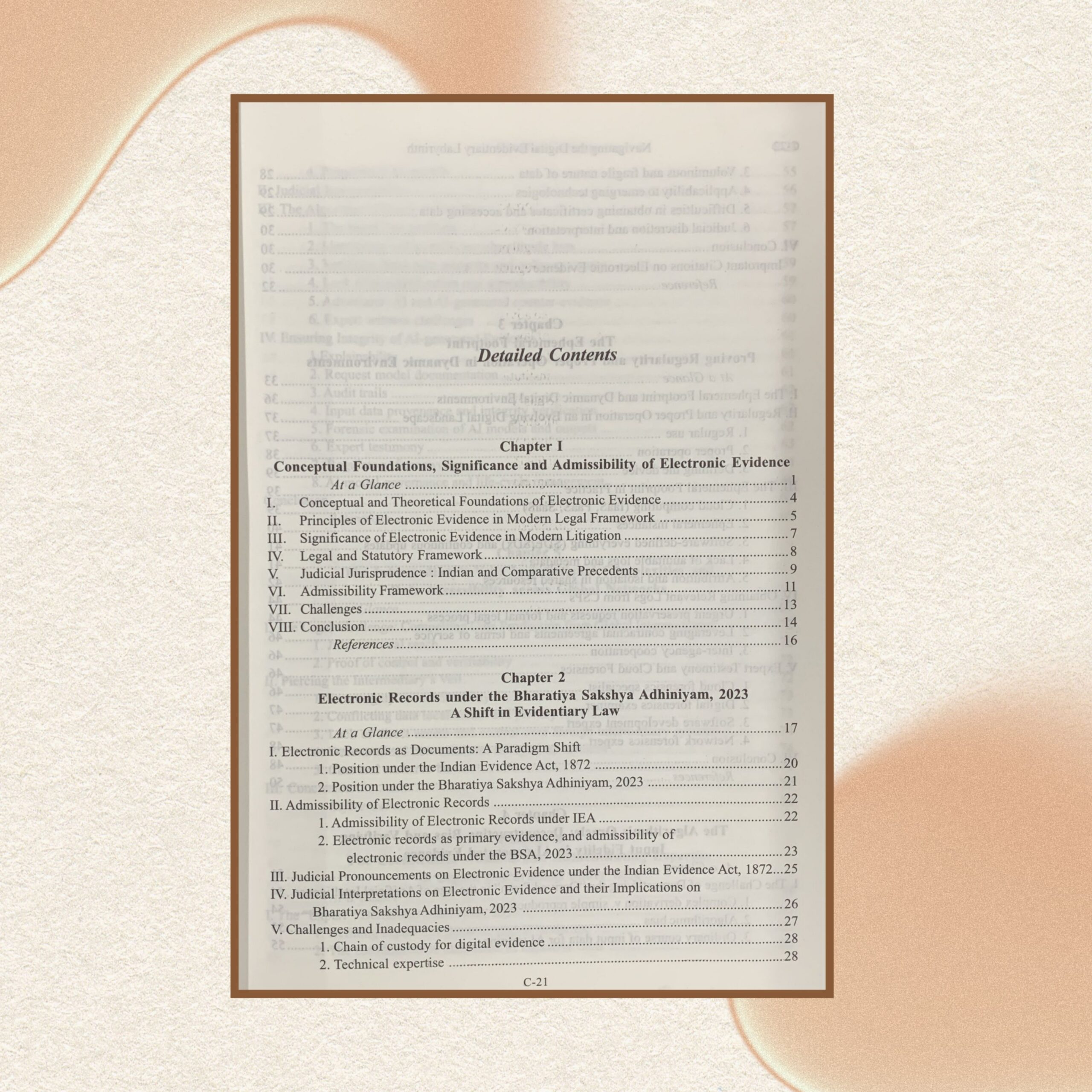
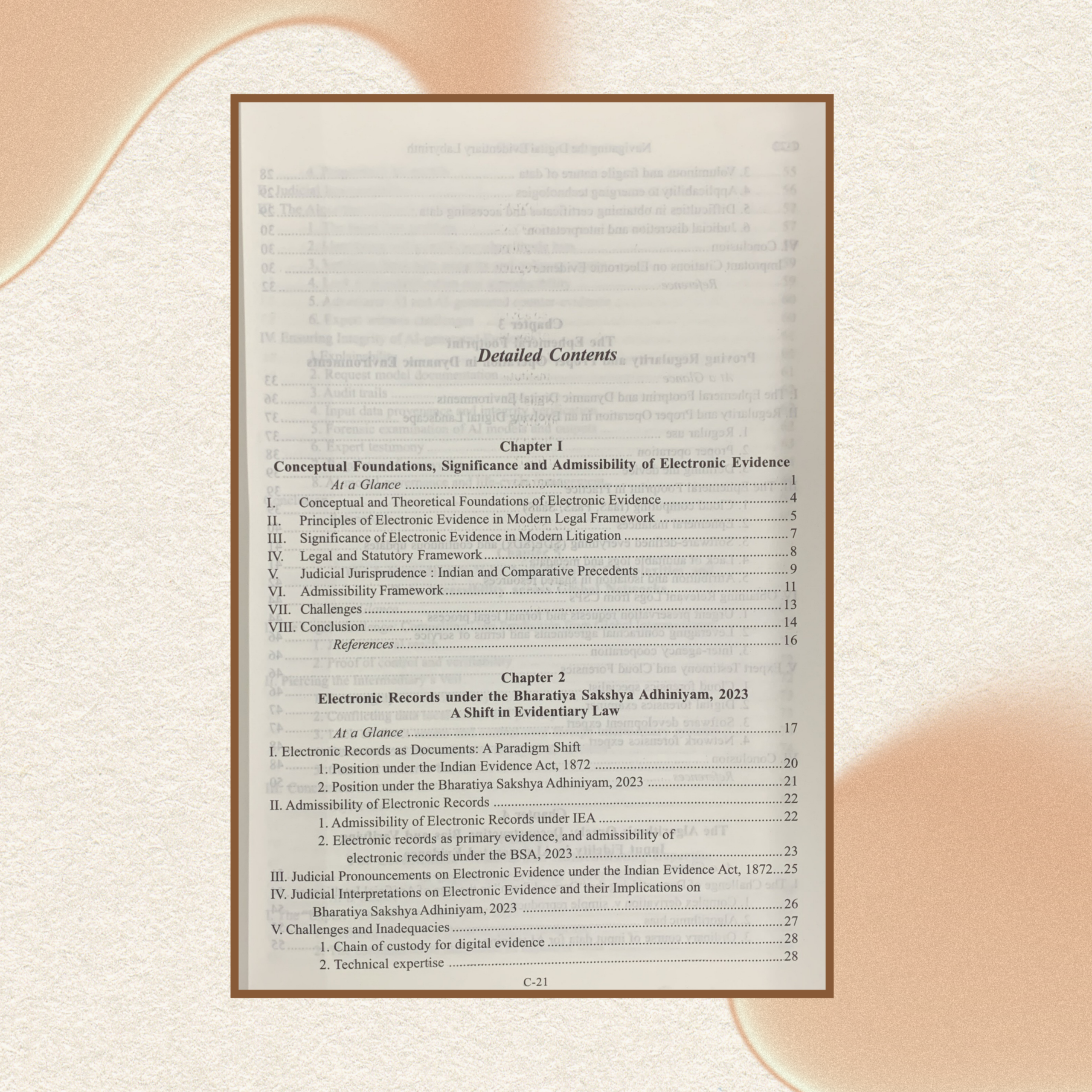
This work offers a lifecycle-based, practitioner-centric guide to electronic evidence under the new evidentiary regime. From seizure to tendering, it addresses the constitutional and procedural questions confronting the modern courtroom: BYOD dilemmas and Article 20(3); the Puttaswamy privacy framework; forensic imaging, hashing, and chain-of-custody discipline; the evolving scope of “computer output” across ephemeral messaging, IoT streams, and cloud logs; and the explanatory role of Section 63(4) certificates and Section 45 expert testimony.
Written for police officers, prosecutors, defence counsel, and judges, the book translates technological complexity into legally intelligible doctrine – rigorous, role-specific, and rooted in constitutional values.
Kannan Perumal, an officer of the Indian Police Service and alumnus of the International Anti-Corruption Academy, Vienna, brings two decades of investigative and anti-corruption experience. Ranjit Shankar Prasad, with thirty-five years of legal practice and a permanent faculty role at the Bihar Institute of Public Administration and Rural Development, contributes deep doctrinal expertise.
Together they deliver an indispensable companion for the digital courtroom – where bytes meet the bench, and the rule of law must remain constant.









Meha Verma –
The authors have explained complex legal concepts in a simple and systematic manner, making the book useful for both academic and practical purposes.The book serves as a valuable reference for law students, advocates, prosecutors, judicial aspirants, and legal practitioners.
Tripti Sharan –
I found Navigating the Digital Evidentiary Labyrinth to be a very relevant and practical read, especially at a time when courts are increasingly dealing with electronic records and digital forms of evidence. What I appreciated most was that the book explains complex issues in a simple and understandable manner without losing its legal substance. The references to recent legal developments and judicial decisions make the discussion current and useful. The author has also touched upon modern concerns such as cyber forensics, authenticity of digital records, and technological advancements in a balanced way. Overall, it is a well-written and informative book that would be beneficial for advocates, judges, researchers, and students alike.
Pankaj Kumar Verma –
“Navigating the Digital Evidentiary labyrinth ” This Book is an impressive and insightful work on digital evidence and contemporary legal issues. The book presents complex concepts in a simple, practical, and engaging manner, making it highly useful for Prosecutors, Defence Counsel, Judges, and students alike. It reflects the author’s deep understanding and dedicated effort towards an important subject. A valuable contribution to the field of law.”
Bhupendra narayan singh,Dist.Prosecution officer (Retd)Cum Spl.PP (EOU) –
“Navigating the Digital Evidentiary Labyrinth” is a highly informative and practical book that brilliantly explains the complexities of digital evidence in today’s technology-driven legal system. The author has successfully combined legal principles with modern forensic and cyber-evidence concepts in a simple, lucid, and professional manner. The book is extremely useful for judges, prosecutors, advocates, investigators, and law students dealing with electronic evidence and cyber-related offences. A timely and valuable contribution to contemporary criminal jurisprudence.
Abhilasha Singh –
“This book provides a concise and informative overview of digital forensics and deleted data recovery. It clearly explains forensic techniques and the legal challenges related to electronic evidence. Overall, it is a useful resource for understanding modern cyber investigations.” Thanks to the author for presenting the topic in such a clear and pratical manner.
priyanka upadhyay –
Outstanding book,,👍
must read👍👍
Afroz Ahmed –
Navigating the Digital Evidentiary Labyrinth is a very good book on Digital evidence. We found many facts relating to digital evidence which may turn out to be a guidance for us.
B. K. Gupta –
This book is an ultimate and highly useful for understanding the transition of digital evidence under the Bhartiya Sakshya Adhiniyam. Digital evidence has been explained in simple manner.
This book is not only useful to Investigation Officers and Prosecutors but to Defence Counsels also, and as well as to Judges.
Bibek Gupta –
This book is an ultimate and highly useful for understanding the transition of digital evidence under the Bhartiya Sakshya Adhiniyam. Digital evidence has been explained in simple way and is too much useful for prosecution, defense counsel, judges and investigation officers.
Shankar Kumar Thakur –
The subject in the form of Navigating the Digital Evidentiary Labyrinth characterize and consists full details of digital forensic and deleted recovery of data, is very relevant and becomes very crucial in the present technology era. The present book diametrically expound to deal with the challenge of forensic implication in the legal proceeding in respect of electronic evidences. This book consists very useful materials to understand the modern cyber crime and it’s investigation for all the stakeholders like Judges, Advocates and other legend. I heartfelt thank to the author who undertaken the brilliant step to compile the book in the field of Digital Forensics.
BARNADEEP NATH –
This book presents legal concepts in a clear, concise, and well-structured manner, making even complicated provisions easy to understand. The authors have successfully combined theoretical explanations with practical insights, which enhances its usefulness for both academic learning and professional application. With its systematic approach, updated content, and lucid language, the book becomes an essential resource for law students, judicial service aspirants, advocates, prosecutors, and legal practitioners seeking a reliable guide for study and reference.
Mohit Tak –
This book explains legal principles in a simple and organized way, helping readers understand even complex topics without difficulty. The content is presented with a good balance of conceptual clarity and practical relevance, making it highly useful for both examinations and real-world legal understanding. Its updated material, easy language, and structured presentation make it a valuable companion for law students, judiciary aspirants, advocates, and anyone looking for a dependable legal reference book.
Utkarsh Amrit –
As a law student it is very hard to find a book which can explain the law with real examples and it’s applicability in real world. I really thank the author for writing this explanatory book.
Amrit Anand –
This book is an ultimate and highly useful for understanding the transition of digital evidence under the Bhartiya Sakshya Adhiniyam. Digital evidence has been explained in simple way and is too much useful for prosecution, defense counsel, judges and investigation officers.
Rated 5 out of 5
Amrit Anand Mishra
Rajiv Shankar Prasad –
This book is very important and useful for all legal professional. In the present situation this book will prove a mile stone in any complicated matter where a digital evidence is involved to prove the matter.
Shreyas Mishra –
The author has explained complex concepts of digital forensics, electronic evidence, cyber investigation, and admissibility in a very clear and systematic manner. The book is especially useful for legal professionals, investigators, police officers, and students interested in cyber law and forensic science.
What impressed me most was the author’s ability to combine technical knowledge with real courtroom applicability. The examples and case-based explanations make the subject easier to understand even for readers without a strong technical background.
Deepak Kumar Sharma –
we live in an era where digital footprints are ubiquitous, transforming both the nature of occurrence of an event and the consequential need of proof before the court of law . The widespread adoption of smart devices , cloud services, and the Internet services has made electronic and cyber evidence a cornerstone of modern legal practice .we have been witnessing the revolutionary shift from physical to electronic mode of proof before the courts .
I found this book extremely helpful in Understanding the admissibility standards of digital evidences , learning forensic best practices for collecting electronic data scattered during its natural transactions leaving the footprints and further how to authenticate electronic documents to make it admissible upon the touchstone of Indian evidence Act , Bhartiya Sakshya adhiniyam and IT laws .
The author of the book ‘Ranjit sir ‘ has bundled his years of insightful experience in this book … a must read for legal professionals and treasure for law students …. Highly recommend
Deepak Kumar Sharma, prosecution officer, govt of Bihar –
It’s an era of digital revolution … electronic footprints and forensics trails has become foundation of authentic and most reliable form of proof …widespread use of electronic means of communications, use of smart devices , cctv footage , SIM cards DNA , GPS, call interceptors , setellite phones , IP addresses , voIP ,digital data and internet services in routine transactions has become infallible form of evidence used in judicial proceedings. Although the process of procuring electronic evidence requires extensive human interventions and hence are not immune of tempering and manipulations . And therefore standard of proof becomes stringent and accurate … I found this book helpful in understanding electronic and digital evidences , data collections during occurrence of events and maintaining its source and authenticity to be admissible before the court of law as per the provisions of evidence act ,Sakshya adhiniyam and IT laws …
It’s Author ‘ Ranjit shakar prasad sir ‘ having comanding knowledge and experience of evidence laws has bundled his years of experience and expertise into this book ….. a must read for legal professionals , judges and prosecutors and a treasure for law library … highly recommended