



Description
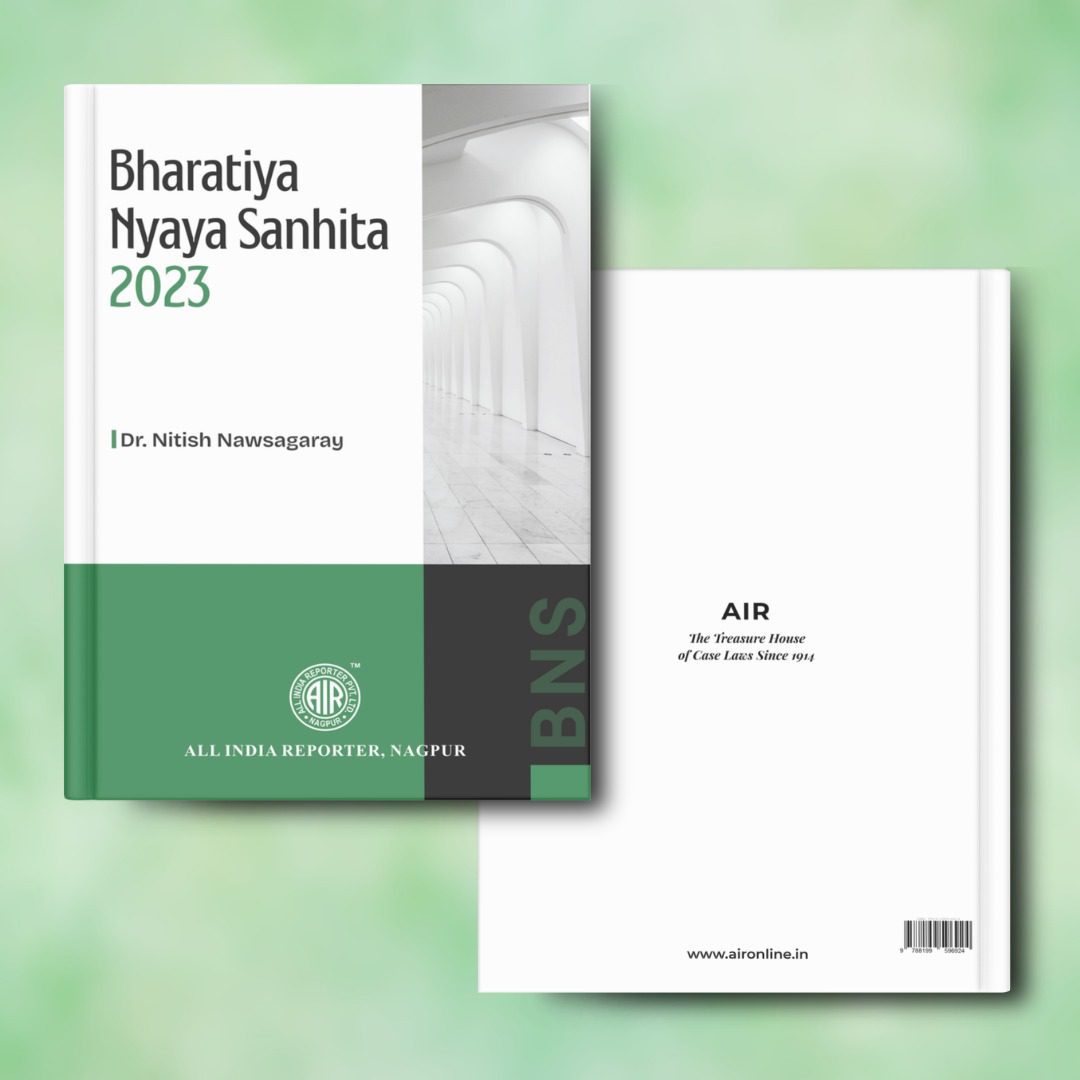
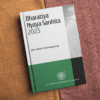
Bharatiya Nyaya Sanhita 2023 – Textbook & Commentary is a comprehensive and well-structured academic resource designed to provide a deep understanding of India’s reformed criminal law framework. Authored by Dr. Nitish Nawsagaray, Associate Professor at ILS Law College, Pune, and Chairman, Board of Studies (Law), Savitribai Phule Pune University, this book serves as both a teaching guide and a practical reference for legal professionals.
The book is thoughtfully designed in a textbook format, making it especially useful for students while also maintaining the analytical depth required by practitioners. It presents a chapter-wise commentary that simplifies complex legal provisions and ensures clarity in interpretation. The Bharatiya Nyaya Sanhita, 2023, marks a significant transformation in India’s criminal law by replacing the Indian Penal Code, 1860. This work goes beyond simple section mapping and provides a detailed examination of each provision in its own context, ensuring that readers understand both the continuity and the changes introduced.
One of the core strengths of this book lies in its section-wise analytical approach. Each provision of the Bharatiya Nyaya Sanhita is explained alongside corresponding references to the IPC, 1860. This parallel comparison helps readers easily identify similarities, differences, and the evolution of legal principles. The author carefully distinguishes between substantive doctrinal changes and mere formal relabelling, enabling readers to grasp the true legislative intent behind the reforms.
The book also integrates IPC-era judicial precedents, applying them wherever the legal position remains consistent. This ensures that readers not only understand the new law but also see how established judicial interpretations continue to hold relevance. Such integration bridges the gap between old and new legal frameworks, making it easier for both students and practitioners to transition smoothly.
In terms of subject coverage, the book provides a comprehensive analysis of key areas of criminal law, including liability, culpability, attempt, abetment, and general exceptions. These foundational concepts are explained in a clear and systematic manner, helping readers build a strong conceptual base. The structured presentation ensures that even complex topics are accessible to first-year law students while still being detailed enough for advanced learners and professionals.
Another notable feature is its pedagogical clarity. The content is conceived and structured as a teaching text, following a logical and easy-to-follow flow. This makes it highly suitable for classroom use, self-study, and exam preparation. At the same time, the depth of commentary makes it a valuable reference tool for advocates, judicial officers, and researchers who require quick yet reliable doctrinal insights.
The book is ideal for a wide audience, including law students, teachers, researchers, advocates, judicial officers, and law institutions. Its dual utility as both a classroom text and a professional reference makes it a versatile addition to any legal library.





Nitin P. Deshpande (Advocate, Hon’ble Bombay High Court) –
It is often said that while the legislature enacts the law, it is the courts that give life to the otherwise dormant words of a statute. Yet courts cannot do so without proper assistance.
That assistance comes from advocates, who draw upon the material available to them. But what is that material? It is not confined to evidence alone. Lawyers must marshal all legally permissible material and present it to the court in a structured and persuasive manner. The responsibility then shifts to judges, who must carefully consider what both sides have placed before them and deliver justice through a reasoned verdict.
This is no easy task. Lawyers and judges alike often lack the time needed to prepare material that stimulates thought, sharpens analysis, and enriches legal understanding. That important work is undertaken by diligent scholars such as Dr. Nitish Nawsagaray.
I had the occasion to read his commentary on Bharatiya Nyaya Sanhita published by All India Reporter, Nagpur. Writing a commentary on criminal law is itself a demanding task, especially when the principal object seems to be to make the reader conceptually clear. This challenge becomes even more daunting when a century old legislation is substantially amended. The comments that suited earlier legislation may not fit in the wordings of the amended legislation. In such a case, the author is handicapped because precedents are silent.
Ordinarily, a commentary on a statute seeks to explain the statutory provisions and present a coherent account of the legal provisions by arranging quotations selected from the relevant judicial pronouncements. Readers are then often left to undertake extensive research themselves in order to clarify foundational concepts. Dr. Nawsagaray, however, departs from this conventional approach. His focus is on making legal concepts clear and accessible, and that too in his own words. To that end, he does not hesitate to refer to classical treatises where necessary.
This commentary has chapters neatly arranged. What appealed to me the most is that the learned author has picked up only essential aspects from his vast knowledge and has explained all the concepts in his own words. Generally, in any commentary, the reader skips the introductory chapters for they are full of material not connected to the subject matter of the book. Nobody takes this part of any commentary seriously. However, Dr. Nawsagaray’s commentary has proved itself to be the exception. The first chapter, pertaining to “General Introduction to Criminal law”, explains what does one mean by “law” and how crime is different from civil wrongs, tort or moral wrongs. This chapter has aptly explained the general meaning of crime and crime as a public wrong. I found that the author has explained the concept of crime from various angles. What I found new is the concept of crime as a creation of government policy. More often, the prevalent social scenario compels the government to newly define a particular act as a crime. The legislature was required to introduce sections like 498A in the erstwhile IPC, the offence of mob-lynching in Section 103(2) of the new BNS. In this regard, the newly defined crimes, like “Terrorist Acts”, “Organized Crime” and “Petty Organized Crime” have also been very well explained in Chapters 28 and 29.
The second chapter provides a brief history of criminal law. This precisely narrated history makes an interesting reading. Up till now everyone of us must have read many enactments and commentaries. However, the exact meaning to the concepts like “codifying statute”, “consolidating statute”, or “amendment statute” were not paid required attention to. These concepts are essential while interpreting any statute. They will help the reader in this regard while dealing with any other statute. This commentary by Dr. Nawsagaray explains these concepts, which makes the commentary unique.
While unfolding the meaning of each and every provision of the BNS, the author has focused on explaining the concept in his own simple language. Such commentaries are rare. Few examples, are the commentary on the Civil Procedure Code by L.B. Bhopatkar. It is an old commentary and I wonder whether it is readily available to those who are interested in understanding the CPC topic-wise. The other is R.V. Kelkar’s commentary on the earlier Criminal Procedure Code.
From my limited experience, I would say that practicing criminal law is always intellectually challenging both for advocates and the judges alike. Of course, provided, the lawyer does not indulge in shortcuts. This commentary provides tools for one to enjoy the pleasure of practicing criminal law. Given the simple manner of explaining the concepts, I am confident that an interested reader would finish reading it in one go and come out with all the concepts fully understood, so much so that he would find it very easy to explain them to anyone. From the feedback that I have received, English-knowing laymen have also found reading this book very easy.
In this age of advanced technology, online journals, and artificial intelligence, some may wonder whether legal commentaries still have a place. In my view, they will continue to remain indispensable. Modern tools may provide information, but they cannot replace the depth needed to trace the history of legislation and the principles underlying it. That deeper insight, in turn, helps one better appreciate the working and implementation of the law.
Dr. Nawsagaray has rendered outstanding service to students, teachers, advocates, judges, and researchers alike. The learned author’s thorough command of criminal law is reflected in the pages of this commentary. No wonder he is a much sought-after Associate Professor in the century old ILS Law College, Pune. His commentary is not merely a useful reference; it is a work of enduring value that deserves a permanent place on every serious legal bookshelf. I commend this Commentary without reservation and am confident that it will continue to guide, instruct, and inspire all who seek a clear and authoritative understanding of criminal law.
zimerov ertover –
I’ve read a few good stuff here. Certainly worth bookmarking for revisiting. I wonder how much effort you put to make such a magnificent informative site.